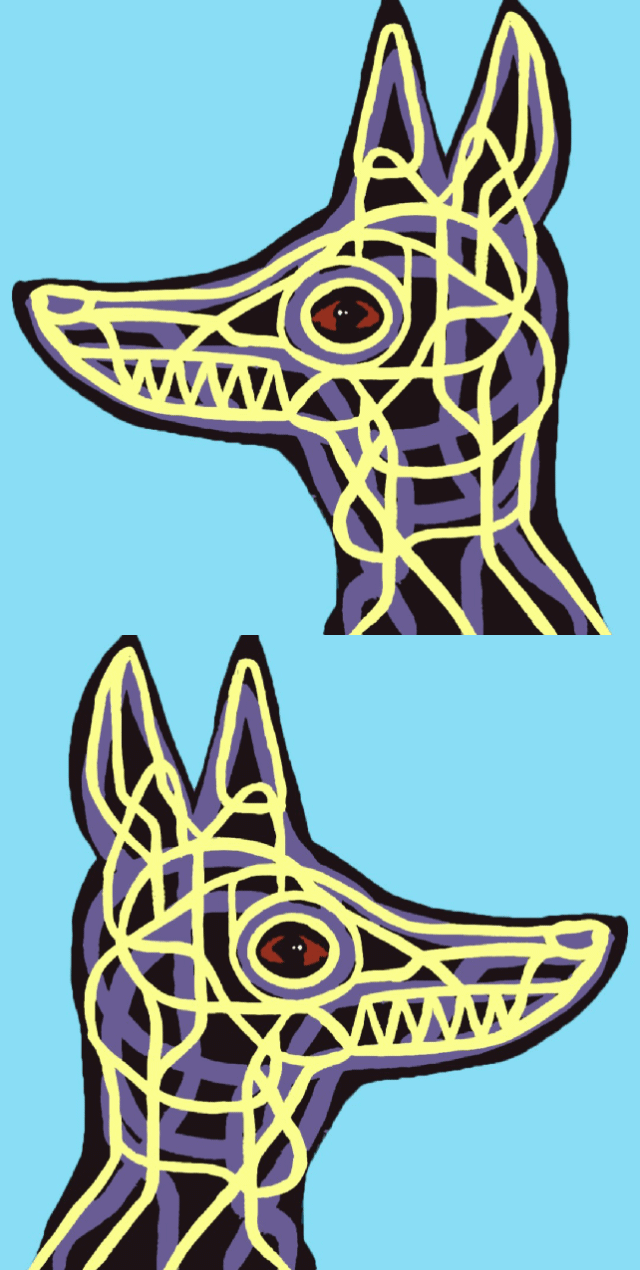
As an artist, I’ve always been fascinated by how technology can expand the boundaries of the canvas. My recent experiments involve transforming original paintings into AI-generated motion art. By using my physical sketches as a visual foundation, I collaborate with AI tools to explore movement and cinematic flow.
This is not about replacing the hand-painted mark; it is about seeing where that mark can go when it’s freed from the static frame. These AI motion videos are a digital evolution of my studio work, creating a bridge between traditional fine art and the future of creative technology.
Beyond the Canvas: How I Evolve Traditional Oil Paintings into Digital “Movement”
In the modern art world, there’s a heated debate: Traditional Art vs. AI. But for me, these aren’t two opposing forces. They are two chapters of the same story.
My creative process doesn’t start with a digital prompt; it starts with the smell of turpentine and the resistance of a stretched canvas. Here is the philosophy of my hybrid workflow and how I use technology to amplify the “movement” of my physical art.
1. The Genesis: It Always Starts with a Physical Stroke
Every piece in my collection begins as a traditional painting. I believe that the human hand possesses a rhythmic imperfection that an algorithm simply cannot initiate.
I spend hours, sometimes weeks, building layers of oil or acrylic. This stage is about the tactile experience—the texture of the paint and the emotional intent behind every brushstroke. For me, the physical painting is the “DNA” of the final piece.
2. Digital Alchemy: Giving the Paint “Movement”
Once the physical painting is complete, the evolution begins. I don’t use AI for artists to create something from nothing. Instead, I use it to explore the “potential energy” already present in my painting.
By introducing my physical work into AI models and digital environments, I am able to:
Extend the Narrative: What happens beyond the edges of the frame?
Animate the Static: I look for the “movement” within a still stroke—how a cloud would drift or how light would refract through the layers I’ve painted.
Complex Variations: AI acts as a collaborative partner that suggests color harmonies and structural shifts I might not have reached through logic alone.
3. The Digital Darkroom: Photoshop and Precision
The final stage of my process happens in Adobe Photoshop. This is where I merge the original soul of the painting with the digital expansion.
This step is crucial for Digital Art Evolution. I meticulously mask and composite the AI-generated elements to ensure they honor the original brushwork. This ensures that even in a digital print or a Print on Demand (POD) product, you can still feel the “grit” and history of the physical canvas.
4. Why Hybrid Art is the Future of Collecting
As an artist, my goal is to bridge the gap between the ancient tradition of painting and the frontier of technology. When you look at my work, you aren’t just looking at a digital file; you are looking at a physical labor that has been given a digital afterlife.
In this era of AI for artists, the value of the human touch has never been higher. By starting on the canvas and ending in the cloud, I offer my collectors the best of both worlds: the authenticity of fine art and the limitless imagination of the digital age.
As an artist, I’ve always been fascinated by how technology can expand the boundaries of the canvas. My recent experiments involve transforming original paintings into AI-generated motion art. By using my physical sketches as a visual foundation, I collaborate with AI tools to explore movement and cinematic flow.
This is not about replacing the hand-painted mark; it is about seeing where that mark can go when it’s freed from the static frame. These AI motion videos are a digital evolution of my studio work, creating a bridge between traditional fine art and the future of creative technology.